Monday, June 8, 2015
Event 1: Hammer Museum

Sunday, June 7, 2015
Space + Art
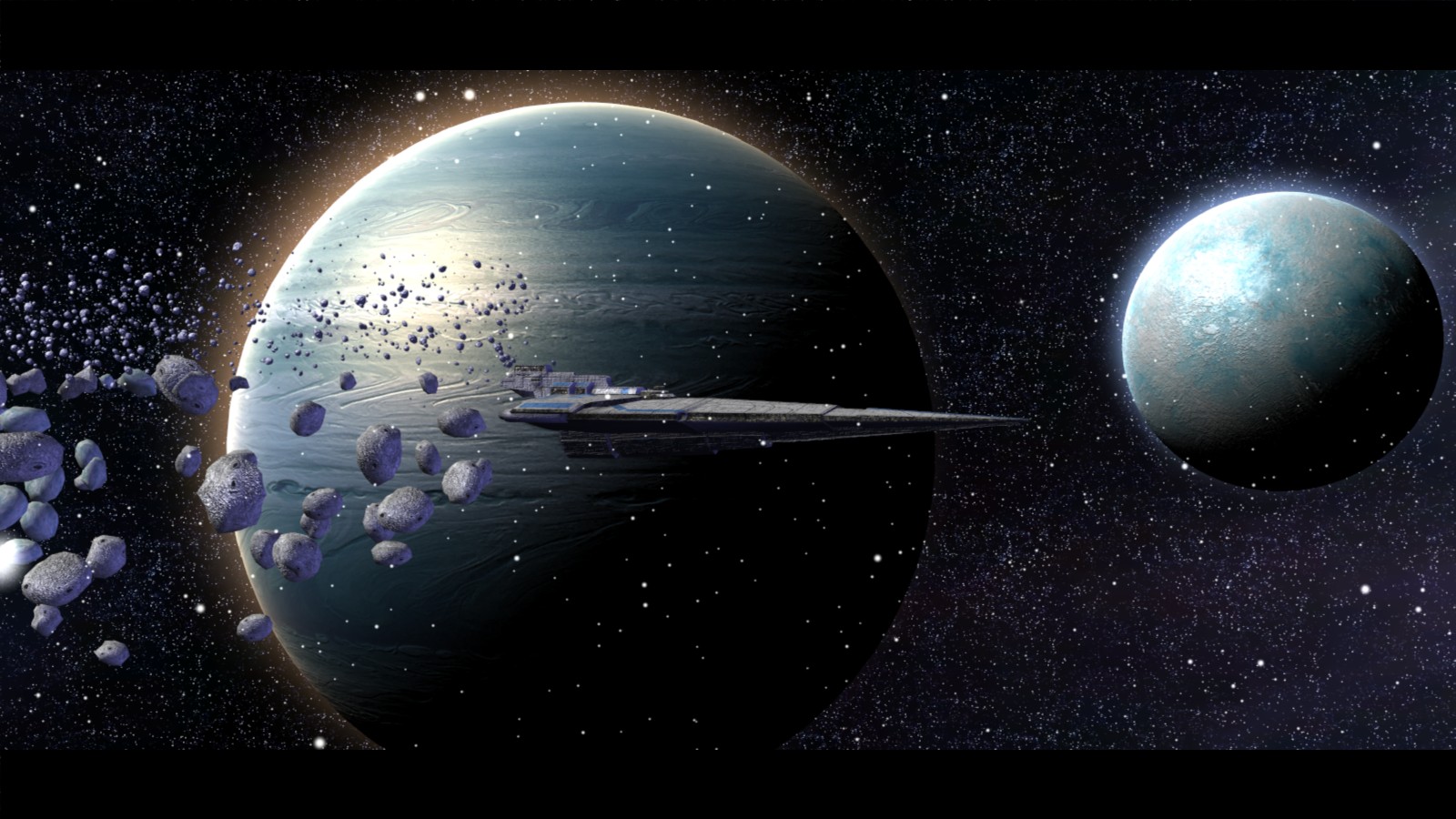 |
| Image of space as depicted in Star Wars |
Over this course we have seen the collision of art,
technology and science and the ways in which they enhance and compliment each
other. We have explored the smallest of things, which was nanotechnology and
now the very largest of things that we will talk about today, space. The video,
“Powers of Ten” really put into perspective how small the earth we live on
actually is compared to the bigger scale of things. We as humans and even the
Earth are only a very tiny speck equated to the universe. Space is such a
fascinating and intriguing topic of study and discussion. It is something way beyond us, millions and
millions of miles away. Before the technology that we have today, one could
only look out at the universe and imagine what this mysterious outside world
was like. Popular movies such as Star Wars were based on space and the
director’s depiction of what this unknown phenomenon could contain.
Beginning with Copernicus and his influential model of the
universe in 1512, the advancements with the study of the universe really began
to spark. In the 17th century, progresses in technology finally gave
us insight into what the universe is like through the invention and lens of the
telescope. Since the times of Copernicus, astronomers have come so far giving
us a great perception of space by launching rockets and satellites to discover
what this mysterious outside world was like. All of these discoveries took what
was once left to our imagination and evolved it into reality.

Nanotechnology also plays a role in space exploration in
numerous ways but one in particular that Professor Vesna covered is Bucky
Balls, which were one of the first nanoparticles discovered. It is said that
billions of years ago comets and meteorites carried these with them when they bombarded
earth. If they were delivered in tact, the molecules would arrive on earth’s
surface. Following these findings, theories surfaced that comets and meteorites
contributed to producing life by supplying organic compounds when they crashed
into earth.
 |
| Japanese artist Yayoi Kusama's Infinity Mirror Room |
Our attraction with outer space displays itself in many
forms of art. According to an article by Alison Nastasi, our fascination with
space has grown rapidly and artists are “exploring concepts of space that are
bringing us closer to the solar system more than ever” (Nastasi). Artist, Yayoi
Kussama composed an art piece that is suppose to “hypnotize” its viewers with
his infinity mirror room. He filled a darkened mirrored room with hundreds of
LED lights and a floor that contained a shallow pool of water portraying its as
the Milky Way. Comparable to the human brain, there are so many unanswered
questions about space despite the many advances we have made and Kusama portrays
this well in his artwork representing the “dizzying sense of endless space.”
Works Cited:
Klotz, Irene.
"Bushels of Buckyballs Found in Space : DNews." DNews. N.p.,
n.d. Web. 06 June 2015.
Nastasi, Alison.
"Cosmic Art Installations Inspired By Space." N.p., n.d. Web. 06
June 2015.
Vesna, Victoria. “Space Exploration + Art lectures.” Youtube. Web. 29 July 2013. <https://www.youtube.com/watch?v=hLZMDpoP-u0>
"What Is a
Buckyball (C60)." Understanding Nano. N.p., n.d. Web. 06 June 2015.
Nanotechnology + Art
 This week’s material was very interesting and something I
had little knowledge of. To most, nanotechnology is a very difficult science to
understand mainly due to its complicated nature and our incapability to
visualize it. I was also surprised at how fairly recent this area of study is, in
1959, Richard Feynman claimed, “this could be a new form of technology that
could change the world” and according to Dr. Gimzewski, he was completely
right. In his talk, “there’s plenty of room at the bottom” Feynman talked about
how tiny things have huge technological potential. But, as I stated earlier, it
is hard for most to comprehend something so microscopic and conceptual making
it difficult for the ordinary eye to understand and trust in this technology.
This is where art plays its role in attempt to make a science that we cannot
visualize easier to grasp and allow a new understanding for nanotechnology.
This week’s material was very interesting and something I
had little knowledge of. To most, nanotechnology is a very difficult science to
understand mainly due to its complicated nature and our incapability to
visualize it. I was also surprised at how fairly recent this area of study is, in
1959, Richard Feynman claimed, “this could be a new form of technology that
could change the world” and according to Dr. Gimzewski, he was completely
right. In his talk, “there’s plenty of room at the bottom” Feynman talked about
how tiny things have huge technological potential. But, as I stated earlier, it
is hard for most to comprehend something so microscopic and conceptual making
it difficult for the ordinary eye to understand and trust in this technology.
This is where art plays its role in attempt to make a science that we cannot
visualize easier to grasp and allow a new understanding for nanotechnology.  According to National Geographic, the Los Angeles Museum of
Art holds an exhibition (that was created by our
very own Professor Vesna & Gimzewski) that allows its visitors to
sense what its like to move molecules and manipulate atoms one by one.
Ultimately, as Professor Vesna describes, this science is about shift in our
perception. This miniscule-based science in which we are very unfamiliar with
forces us to move from visual to adapt to a culture based on sensing and
connectivity (Vesna).
According to National Geographic, the Los Angeles Museum of
Art holds an exhibition (that was created by our
very own Professor Vesna & Gimzewski) that allows its visitors to
sense what its like to move molecules and manipulate atoms one by one.
Ultimately, as Professor Vesna describes, this science is about shift in our
perception. This miniscule-based science in which we are very unfamiliar with
forces us to move from visual to adapt to a culture based on sensing and
connectivity (Vesna). Nanotechnology has also made its way to the field of
medicine. Nano particles can be used in medicine with the capability of treating
cancer patients to reduce the toxicity of their chemotherapy. This technology
has immense potential with the ability to be very effective in the field of
medicine, with the power to be highly sensitive and causing little to no damage
to a patient. With these findings and the constant study o
Nanotechnology has also made its way to the field of
medicine. Nano particles can be used in medicine with the capability of treating
cancer patients to reduce the toxicity of their chemotherapy. This technology
has immense potential with the ability to be very effective in the field of
medicine, with the power to be highly sensitive and causing little to no damage
to a patient. With these findings and the constant study o
Just as we have been
learning all quarter, though being very different disciplines, art, science and
technology cannot be independent of the other. The three disciplines inspire
each other and more importantly, supplement each other expanding our knowledge
to greater heights everyday.
Works Cited:
"Can Art Make
Nanotechnology Easier to Understand?" National Geographic. National
Geographic Society, n.d. Web. 05 June 2015.
"Nanotech Jim lectures" YouTube. https://www.youtube.com/watch?v=q7jM6-iqzzE
"Simulation and
the Art of Making Nanotechnology Work." - E & T Magazine. N.p.,
n.d. Web. 04 June 2015.
"The Promise Of Nanotechnology." CISN -. N.p., n.d. Web. 04 June 2015.
"Understanding Nanotechnology." National Cancer Institute. N.p., n.d. Web. 06 June 2015.
Wednesday, May 20, 2015
Neuroscience + Art
 Before we had the means and
technology to really research the brain and its functions, Aristotle proposed
that the brain was a cooling mechanism for the blood and all our thinking came
from the heart (Vesna). It is so fascinating to see all the advancements made
and how far we have come with neuroscience and the research and findings still
occurring today. Though we have made massive amounts of progress with research
over the years, there are still many unanswered questions regarding this unique
and very complicated organ and how neuro functions work.
Before we had the means and
technology to really research the brain and its functions, Aristotle proposed
that the brain was a cooling mechanism for the blood and all our thinking came
from the heart (Vesna). It is so fascinating to see all the advancements made
and how far we have come with neuroscience and the research and findings still
occurring today. Though we have made massive amounts of progress with research
over the years, there are still many unanswered questions regarding this unique
and very complicated organ and how neuro functions work. 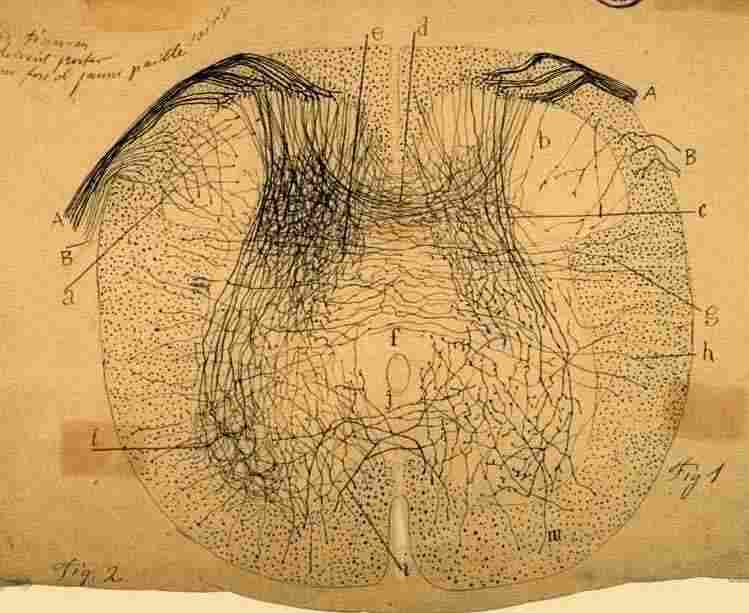 |
| One of Cajals influential illustrations |
The brain is a true work of
art that has been vastly studied with high appeal to understand how this
complex organ works, and just like the body itself, artists have used this
organ as an influence for their art. The merge between art and neuroscience is
shown through artist and scientist, Ramon Cajal who claimed that, “only artist
are attracted to science” (Vesna). With his research and knowledge he composed
iconic pictures that contributed greatly to the complicated field of
neuroscience. He was the first person to create illustrations that accurately portrayed
the neurological system. Cajal is a great example of the merge between art and
science because without the means of technology, his artistic ability allowed
him to share his findings to the public.
 |
| Representation of the brain on LSD |
What I found most interesting
this week was the popularity and role that mind altering and psychedelic drugs
had in early history, in particular cocaine and LSD. It is shocking that these
highly illegal drugs were once widely available and so normal and common to use
and even considered “wonder drugs.” Cocaine was initially used for medical
purposes until it became highly abused resulting in masses of addicts who in
turn needed medical care. The brain has tremendous depth with so many
interesting possibilities and with early research science desired to understand
and explore the different ways in which we can utilize this complex organ.
Exploring the use of chemicals and neuron reactions was one common way used to discover
aspects of the human mind and how it can be altered and affected. Albert Hofman
experimented with LSD for medical purposes to later find out the hallucinogenic
side effects that allowed us to explore a part of the mind that would have
never been discovered and experienced otherwise. This naturally poses curiosity
and how substances can affect our mind and offer understanding to the endless
capacity of the brain. It is a very controversial drug, especially in early
history when it was popular, that ultimately opened the door to countless research
and fascinating findings in attempt to explore and make sense of the complex
yet fascinating field of neuroscience.
Works Cited:
Cohen, Mark.
"Lecture by Mark Cohen." YouTube. YouTube, n.d. Web.
Sabbatini, Renato.
"The Neuron Doctrine." Brain and Mind. N.p., 23 Feb. 2003.
Web.
"Unravelling the
Effects of Acid in the Brain." Research & Development. N.p., 21
May 2012. Web.
Vensa, Victoria. Neuroscience + Art Lectures I-III. UC Online. N.p., n.d. Web.
Monday, May 18, 2015
Biotechnology + Art

This week’s topic is very interesting because of
the fascinating yet controversial concepts that derive from the advancements
between art and biotechnology. For example, genetically modified food poses questions
of safety and health factors of the food but it accounts for farming and
producing crops much more time effectively. As for animal experimentation, it
poses the question whether it is ethically right or wrong though many
interesting results have come from these experiments.
 Since the introduction of
genetically modified organisms they have been a source of controversy. In
my opinion, though experiments used on animals can be interesting; they can be
harmful and serve no purpose or contribution to society. Just like the
experiment of the jellyfish luminescent gene. While it is used on animals for
the purpose of research to study biological processes and disease, it was also
used by artist Eduardo Kac solely for the purpose of art known as “transgenic
art.” This is where ethical implications come into question while experimenting
with genetic engineering: is it right or wrong? Though Kac clearly does care
for his “GFP bunny” Alba and provides her with the care needed, even after
listing his explanation for his transgenic artwork, I as well as many animal
activists will agree that there is really no sensible reason for him to alter the
natural order of animals for this purpose. Though, I do agree and understand
using biotechnology for beneficial research purposes that continue to make a difference
in our medical field and society.
Since the introduction of
genetically modified organisms they have been a source of controversy. In
my opinion, though experiments used on animals can be interesting; they can be
harmful and serve no purpose or contribution to society. Just like the
experiment of the jellyfish luminescent gene. While it is used on animals for
the purpose of research to study biological processes and disease, it was also
used by artist Eduardo Kac solely for the purpose of art known as “transgenic
art.” This is where ethical implications come into question while experimenting
with genetic engineering: is it right or wrong? Though Kac clearly does care
for his “GFP bunny” Alba and provides her with the care needed, even after
listing his explanation for his transgenic artwork, I as well as many animal
activists will agree that there is really no sensible reason for him to alter the
natural order of animals for this purpose. Though, I do agree and understand
using biotechnology for beneficial research purposes that continue to make a difference
in our medical field and society.  | ||||
| Shown above is different statistics regarding GMO's |
Genetically modified foods are another aspect of
biotechnology that has also caused a major controversy amongst consumers.
People consume GMO’s daily without even being aware of it. It is estimated that sixty percent to seventy-five percent
of processed food generally found in local grocery stores and restaurants are
genetically modified (Feature). On one hand, advocates claim that genetically
engineering technology can increase food supply, use fewer pesticides and
herbicides, increase the nutrition benefits, and are more durable then other
plants but on the other hand GMO activists argue that genetically modified
foods cause health risks, introduce allergens and contaminants to food, create
super weeds and other environmental threats.
Though there are positive and
negative aspects to GMO’s, biotech engineer’s main goal is to create solutions
to starvation and issues following food production.
Overall, there are
imperfections in all areas of life and as genetically modifying technology
continues to advance it will also continue to adapt and grow and more knowledge
will be created to use this technology to better our society as a whole.
Works Cited:
Feature,
WebMD. "Genetically Modified Foods (Biotech Foods) Pros and Cons." WebMD. WebMD, n.d. Web. 05.
"Genetically
Engineered Foods – Why the Controversy?" Genetically Engineered Foods – Why the Controversy? The Real Truth,
n.d. Web.
Vesna,
Victoria. “5 Bioart Part 1.” Online video. YouTube. UC Online, Web.
Friday, May 8, 2015
Week 4: MedTech + Art
 I really enjoyed this week. It is so fascinating
to me that two completely different disciplines such as Medicine and art can
come together and have such a powerful influence on how far we have come with
research and our understanding of medicine. The human body has always been a
deep fascination and combining the power of art, technology and medicine
allowed for both doctors and artists to advance in imaging the body from
drawing dissections by hand to technologically advanced 3D scans allowing for
us to get a better understanding of our body’s anatomy.
I really enjoyed this week. It is so fascinating
to me that two completely different disciplines such as Medicine and art can
come together and have such a powerful influence on how far we have come with
research and our understanding of medicine. The human body has always been a
deep fascination and combining the power of art, technology and medicine
allowed for both doctors and artists to advance in imaging the body from
drawing dissections by hand to technologically advanced 3D scans allowing for
us to get a better understanding of our body’s anatomy. 
Lecture three, part three left the most impression on me. I
feel it poses the question as to whether plastic surgery is a true form of art.
I personally believe this can be answered with two sides. Particularly, Orlan
left an uneasy impression on me. Firstly, I do believe it is an art form due to
having the skill and ability to sculpt a part of the human body however only in
the sense of reconstructing for the purpose of medical treatment. Emerging from
WWI, physicians at the time had to treat a lot of fatal injuries caused by the
damage of war. The destructions and fatalities caused by war was a primary
factor in the advances in medical professions (Vesna). Using the accumulation
of art, technology and medicine huge innovations emerged, such as prosthetic
and bionic limbs for those who had lost limbs returning from war. Now secondly,
I believe that such an innovative breakthrough in medicine should not be used
for aesthetic reasons. Orlan’s ‘performative’ use of plastic surgery in my
opinion is unethical. Today, it is so common generally in the older generation
to receive plastic surgery in order to hinder their natural aging process and
make them more aesthetically “beautiful.” I strongly believe that such an
amazing advancement in technology should be used honorably amongst those with
genuine medical disabilities that will better there over all health and
mobility. Surgery is definitely an art and surgeons themselves are masters in
their craft.

Works Cited:
Lecture Part 1,2,3. Perf. Victoria Vesna. Medicine + Technology + Art. N.p., n.d. Web. 29 Apr. 2015.
Neurogadget. N.p., n.d. Web.
<http%3A%2F%2Fneurogadget.com%2F2013%2F12%2F11%2Fsoldier-talks-thought-controlled-bionic-arm-video%2F9154>.
"Anatomy of Male
Muscular System - Posterior and Anterior View - Full Body – Didactic." Depositphotos.
N.p., n.d. Web.
<http://depositphotos.com/14814419/stock-photo-anatomy-of-male-muscular-system.html>.
"CT Brain
Perfusion." Cedars-Senai. N.p., n.d. Web.
<http://www.cedars-sinai.edu/Patients/Programs-and-Services/Imaging-Center/For-Physicians/Neuroradiology/CT-Brain-Perfusion.aspx>.
Subscribe to:
Posts (Atom)